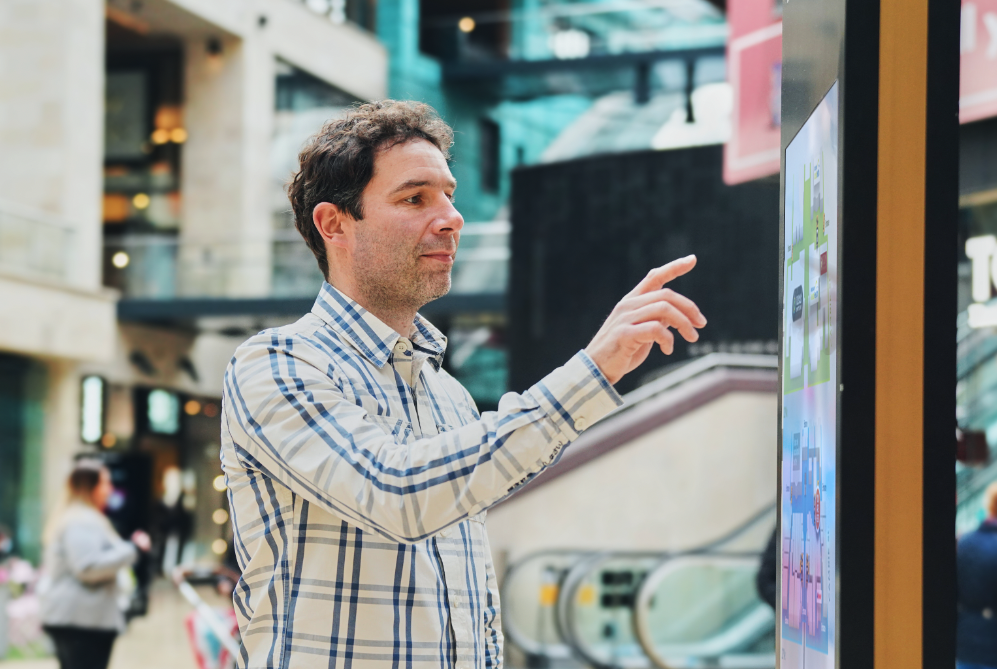
2020-23 | Design Director | Ultraleap (Leap Motion)Ultraleap made hand-tracking technology, and during Covid created touchless public displays and kiosks - touchscreen displays retrofitted for control via gesture from a distance. Over three years team and I took this new product from idea to market.
Background
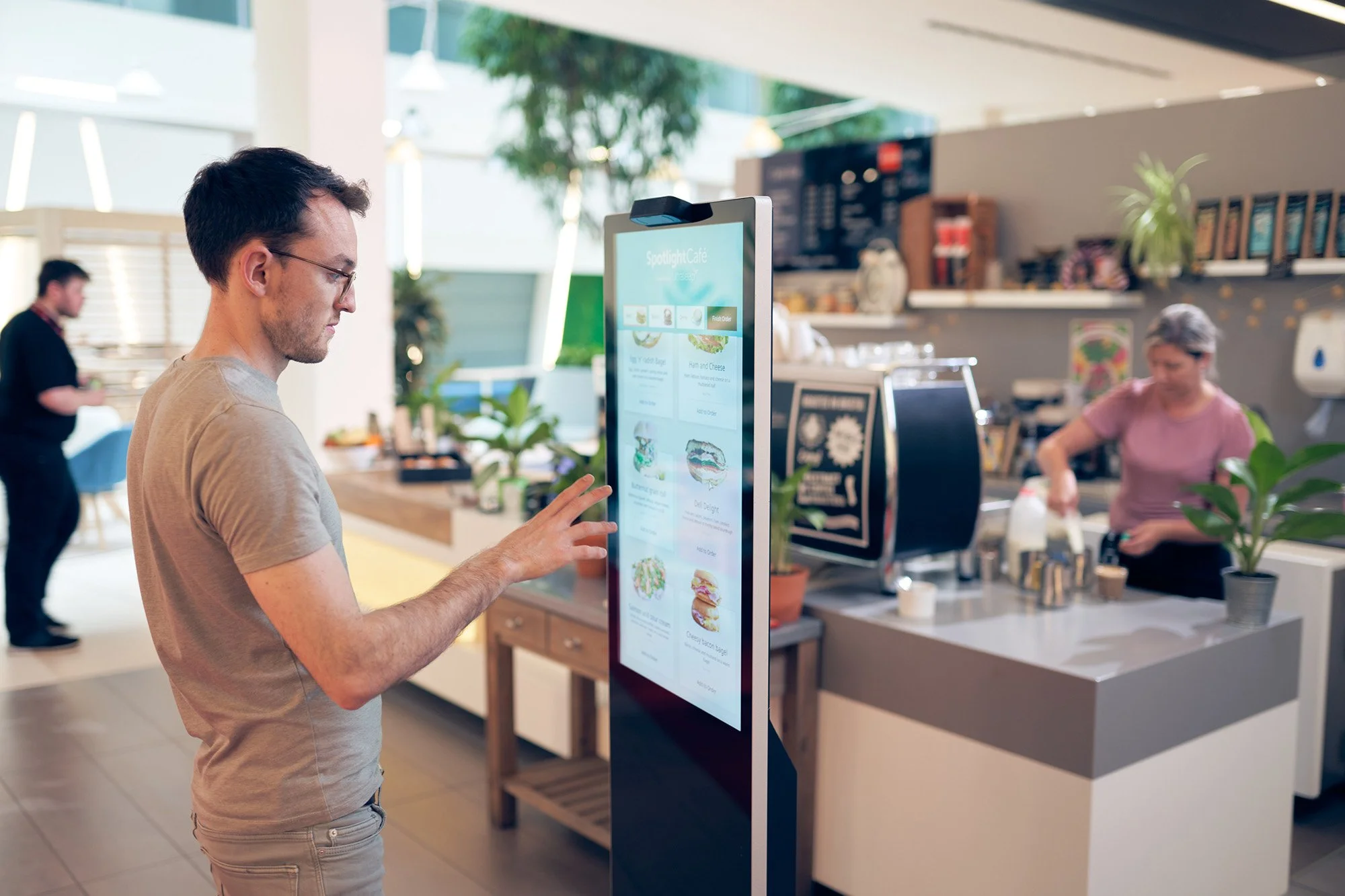
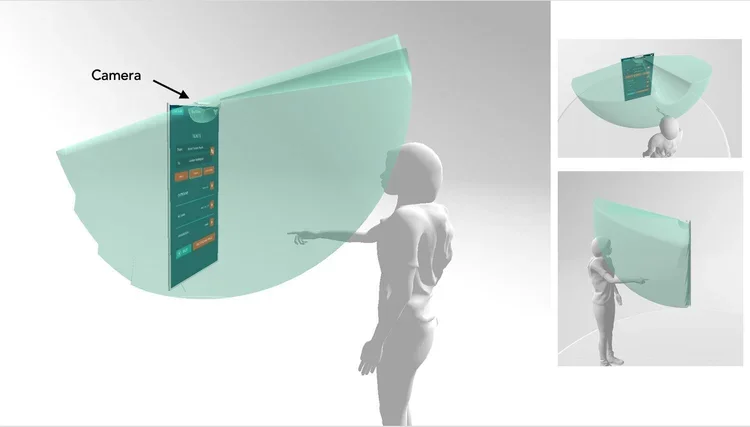
Ultraleap (previously Leap Motion)’s hand-tracking technology was the best in the business, but the company needed to find clear commercial use cases for it. During Covid, the company began exploring whether public touchscreen displays and kiosks - such as fast-food ordering or airline check-in - could be retrofitted to work with hand-tracking, and thus be controlled via gesture from a distance.
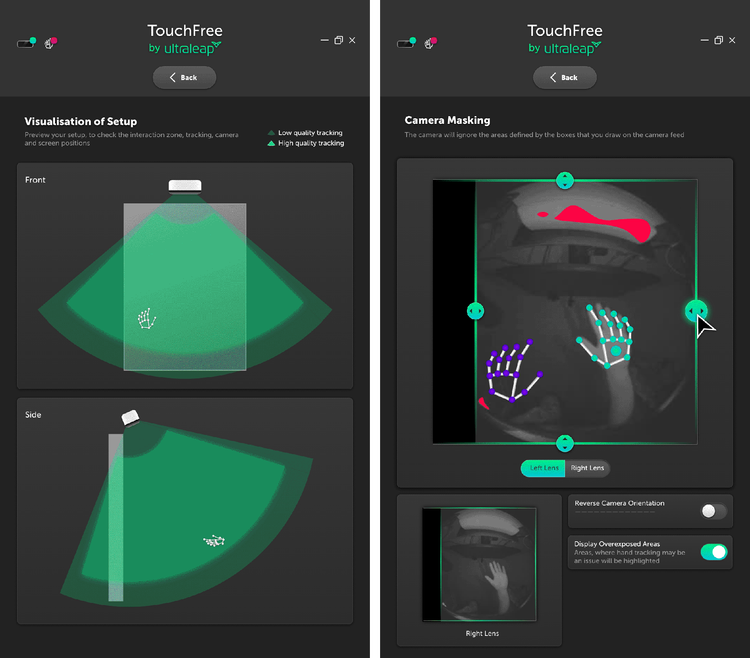
Bringing this idea to market was a significant design challenge as what had previously been a niche technology product for home enthusiasts was now being considered for rollout in public spaces. This would mean being useable and accessible to most of the general public, as well as working in a wide range of unpredictable environments. Not to mention ensuring the public understood what it was and wanted to use it.
Work & Outcomes
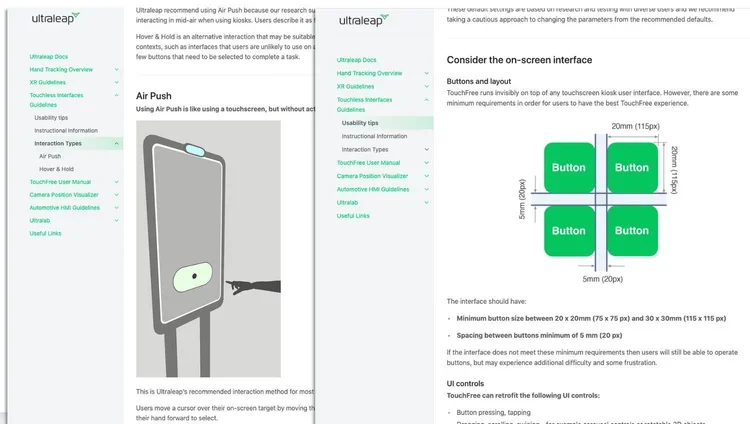
For my team and I, the project took three years. Starting with several proof of concepts and user research studies, we established the fundamentals of how one controls a cursor or similar, pushes buttons and controls elements like sliders - all from a distance.
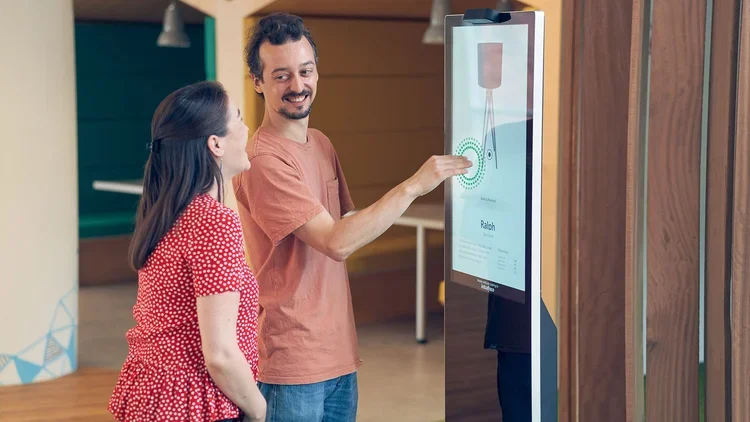
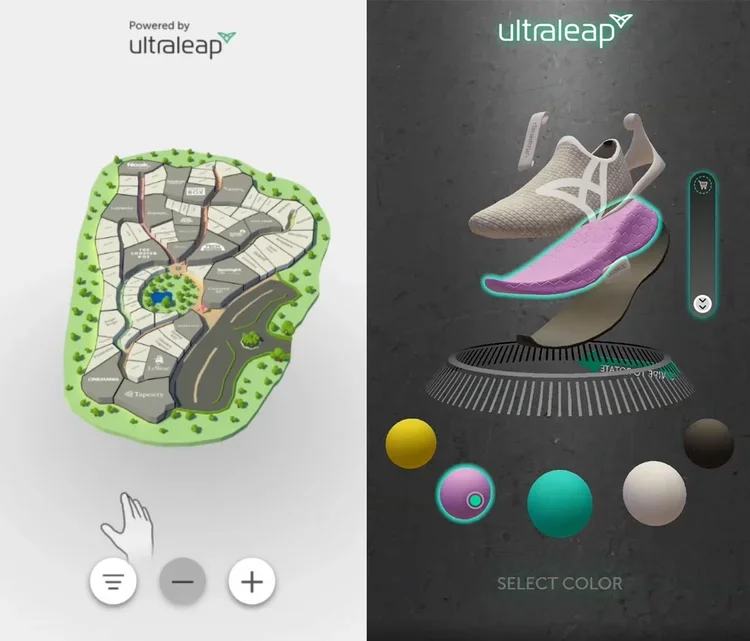
Over time, we took lessons from our parallel work in XR to feature interfaces with more three-dimensional elements, such as turntables and navigable 3D models. We also explored testing with a wide range of body and hand types, with young children, and with users with various physical disabilities.
A significant barrier to adoption was realising a display was touchless in the first place and understanding how to interact with it quickly - something that we learned a great deal about when we moved to a public trial at a UK service station restaurant. Our designers learned to use splash screens and signage to introduce the product, and build exaggerated feedback into on-screen interactions to give users the required confidence inputs were recognised.